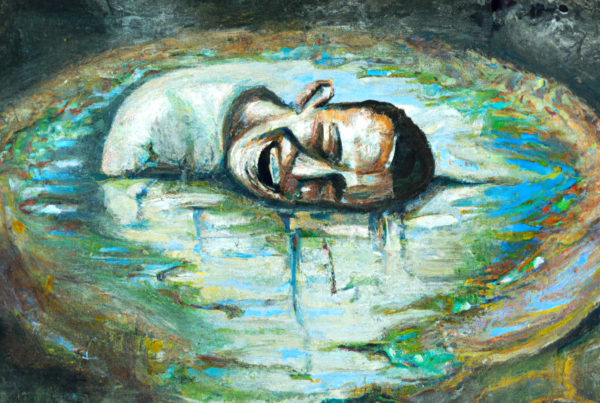
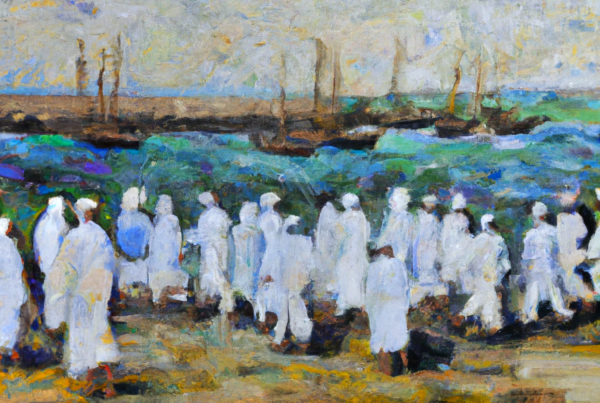
AI-generated art depicting an old man sitting outside al-Masjid an-Nabawi in Madinah
About the Poem:
| Author | Purnam Allahabadi |
| Time Period | 20th century CE |
| Languages | Urdu |
| Type | na’at |
| Meter | = – = / = – = / = – = / = / = – = / = – = / = – = / = |
Introduction
“Bhar Do Jholi” is a popular qawwali most famously performed by the late Sabri Brothers, Ghulam Farid Sabri (1930-1994) and Maqbool Ahmed Sabri (1945-2011), from Pakistan. It was written by Purnam Allahabadi (1940-2009), a prolific Urdu poet whose real name was Mohammed Musa. “Bhar Do Jholi” appears in his book Phool Dekhe Na Gaye (I Could Not Look at Flowers), which was published in the 1960s or 1970s (link below). The Sabri Brothers released their original recording of the qawwali in 1972. Later, in 2015, the qawwali was repopularized when Adnan Sami performed a different version of it in the Bollywood blockbuster Bajrangi Bhaijaan.
The qawwali performed by the Sabri Brothers elaborates on Purnam’s original poem by going into more detail about the individuals and events he wrote about. These additional verses may have been penned by Purnam himself, but I have not been able to verify that and therefore have marked those lines as “unverified”. “Bhar Do Jholi” is primarily a na’at, or a praise of the prophet Muhammad. However, it also praises two individuals close to Muhammad: his Abyssinian companion Bilal ibn Rabah and his grandson Husayn ibn Ali.
The speaker takes on the role of a beggar, asking the prophet Muhammad for alms. At the surface level, he is begging for physical sustenance, but a deeper level for spiritual sustenance and redemption. I have rendered the title phrase “bhar do jholi” as “fill my jholi” because “jholi” has no English equivalent. “Jholi” refers to the lower portion of one’s upper garment that beggars fold upward from the bottom corners and hold to fill it with donations. So, the speaker is extending his garment out in front of Muhammad to metaphorically have it filled. An approximation of “jholi” in English could be “beggar’s sack/bag” or “bindle”.
Three stories from the Islamic tradition are referenced in this qawwali. First, the speaker praises Husayn, who was martyred alongside his family by the tyrant Yazid at the Battle of Karbala in 680 CE. Second, the speaker describes a future event – sinners rejoicing on Judgment Day when the prophet Muhammad arrives to intercede on their behalf. Interestingly, Muhammad is described as “kaali kamli vaala”, meaning “the one with a black shawl”. This is an epithet also used by Hindus to describe Krishna. Finally, the speaker praises Bilal, who was the first muezzin (reciter of the adhan, the Islamic call to prayer). Bilal was freed from slavery by Muhammad’s friend Abu Bakr, and Muhammad chose him to be the first muezzin some time between 622 and 630 CE in Madinah.
At the end of the na’at, Purnam Allahabadi includes his takhallus (pen name) when he writes, “kaash purnam dayaar-e nabi meN jeete ji ho bulaava kisi din”. Urdu poets sometimes use their takhallus in creative ways when they incorporate it in their work. Purnam is not only the author’s name, but also means “tearfully” or “weeping”. This play on words adds another meaning to that line. Thus, it could be translated as “If only, Purnam, I may be summoned to the Prophet’s homeland someday in my life!” or “If only, I may be summoned to the Prophet’s homeland someday in my life, while weeping [from being overwhelmed]!”
Featured Rendition:
Original 1975 recording by the Sabri Brothers
Text, Transliteration, and Translation
Urdu (Unverified)
شہِ مدینہ سنو اِلتجا خدا کے لیے
शह-ए-मदीना सुनो इल्तिजा ख़ुदा के लिए
shah-e madeena suno iltija khuda ke liye
O King of Madinah, hear my plea, for God’s sake!
کرم ہو مجھ پہ حبیبِ خدا خدا کے لیے
करम हो मुझ पे हबीब-ए-ख़ुदा ख़ुदा के लिए
karam ho mujH pe habeeb-e khuda khuda ke liye
Bestow your favor upon me, O Beloved of God, for God’s sake!
حضور غنچۂ اُمّید اب تو کھِل جائے
हुज़ूर ग़ुंचा-ए-उम्मीद अब तो खिल जाए
huzoor ghuncha-e ummeed ab to kHil jaa’e
My lord, let the bud of my hopes blossom now.
تمہارے در کا گدا ہوں تو بھیک مِل جائے
तुम्हारे दर का गदा हूं तो भीक मिल जाए
tumhaare dar ka gada hooN to bHeek mil jaa’e
I am a pauper at your door, so allow me to receive alms!
Urdu (Purnam Allahabadi)
بھر دو جھولی مِری یا محمّد لَوٹ کر میں نہ جاؤں گا خالی
भर दो झोली मिरी या मुहम्मद लौट कर मैं न जाऊंगा ख़ाली
bHar do jHoli miri ya muhammad lauT kar maiN na jaa’ooN ga khaali
Fill my jholi, O Muhammad, for I will not go back empty-handed!
Urdu (Unverified)
بھر دو جھولی ہم سب کی
भर दो झोली हम सबकी
bHar do jHoli ham sab ki
Fill all of our jholis!
بھر دو جھولی محمّد
भर दो झोली मुहम्मद
bHar do jHoli muhammad
Fill my jholi, Muhammad!
بھر دو جھولی عاقا جی
भर दो झोली आक़ा जी
bHar do jHoli ‘aaqa ji
Fill my jholi, dear master!
تمہارے آستانے سے زمانہ کیا نہیں پاتا
तुम्हारे आस्ताने से ज़माना क्या नहीं पाता
tumhaare aastane se zamaana kya naheeN paata
What does the world not receive from your doorstep?
کوئی بھی در سے خالی مانگنے والا نہیں جاتا
कोई भी दर से ख़ाली मांगने वाला नहीं जाता
koi bHi dar se khaali maangne vaala naheeN jaata
No one who comes asking at your door leaves empty-handed!
بھر دو جھولی میری سرکارِ مدینہ
भर दो झोली मेरी सरकार-ए-मदीना
bHar do jHoli meri sarkaar-e madeena
Fill my jholi, Lord of Madinah!
بھر دو جھولی میری تاجدارِ مدینہ
भर दो झोली मेरी ताजदार-ए-मदीना
bHar do jHoli meri taajdaar-e madeena
Fill my jholi, Sovereign of Madinah!
تم زمانے کے مختار ہو یا نبی
तुम ज़माने के मुख़्तार हो या नबी
tum zamaane ke mukhtaar ho ya nabi
You are the chosen one of the age, O Prophet!
بیکسوں کے مددگار ہو یا نبی
बेकसों के मददगार हो या नबी
be-kasoN ke madadgaar ho ya nabi
And the helper of the friendless, O Prophet!
سب کی سنتے ہو اپنے ہوں یا غیر ہوں
सब की सुनते हो अपने हों या ग़ैर हों
sab ki sunte ho apne hoN ya ghair hoN
You listen to everyone, whether they are your own or strangers.
تم غریبوں کے غمخوار ہو یا نبی
तुम ग़रीबों के ग़मख़्वार हो या नबी
tum ghareeboN ke ghamkhwaar ho ya nabi
You are the comforter of the poor, O Prophet!
بھر دو جھولی میری سرکارِ مدینہ
भर दो झोली मेरी सरकार-ए-मदीना
bHar do jHoli meri sarkaar-e madeena
Fill my jholi, Lord of Madinah!
بھر دو جھولی میری تاجدارِ مدینہ
भर दो झोली मेरी ताजदार-ए-मदीना?
bHar do jHoli meri taajdaar-e madeena
Fill my jholi, Sovereign of Madinah!
ہم ہیں رنج و مصیبت کے مارے ہوئے
हम हैं रंज-ओ-मुसीबत के मारे हुए
ham haiN ranj-o museebat ke maare hu’e
I am struck with grief and hardship.
سخت مشکل میں ہیں غم سے ہارے ہوئے
सख़्त मुश्किल में हैं ग़म से हारे हुए
sakht muskhil meN haiN gham se haare hu’e
I am in great difficulty, defeated by sorrow!
یا نبی کچھ خدا را ہمیں بھیک دو
या नबी कुछ ख़ुदारा हमें भीक दो
ya nabi kuchH khuda-ra hameN bHeek do
O Prophet, give me some alms for God’s sake!
در پہ آئے ہیں جھولی پسارے ہوئے
दर पे आए हैं झोली पसारे हुए
dar pe aa’e haiN jHoli pasaare hu’e
I have come to your door with my jholi stretched open!
بھر دو جھولی میری سرکارِ مدینہ
भर दो झोली मेरी सरकार-ए-मदीना
bHar do jHoli meri sarkaar-e madeena
Fill my jholi, Lord of Madinah!
بھر دو جھولی میری تاجدارِ مدینہ
भर दो झोली मेरी ताजदार-ए-मदीना
bHar do jHoli meri taajdaar-e madeena
Fill my jholi, Sovereign of Madinah!
ہے مخالف زمانہ کدھر جائیں ہم
है मुख़ालिफ़ ज़माना किधर जाएं हम
hai mukhaalif zamaana kidHar jaa’eN ham
The times are against me, where should I go?
حالتِ بیکسی کس کو دکھلائیں ہم
हालत-ए-बेकसी किस को दिखलाएं हम
haalat-e be-kasi kis ko dikHlaa’eN ham
To whom should I show my state of helplessness?
ہم تمہارے بھکاری ہیں یا مصطفےٰ
हम तुम्हारे भिकारी हैं या मुस्तफा
ham tumhaare bHikaari haiN ya mustafa
I am your beggar, O Mustafa!
کس کے آگے بھلا ہاتھ پھیلائیں ہم
किसके आगे भला हाथ फैलाएं हम
kis ke aage bHala haatH pHailaa’eN ham
In front of whom else shall I spread my hands?
بھر دو جھولی میری سرکارِ مدینہ
भर दो झोली मेरी सरकार-ए-मदीना
bHar do jHoli meri sarkaar-e madeena
Fill my jholi, Lord of Madinah!
بھر دو جھولی میری تاجدارِ مدینہ
भर दो झोली मेरी ताजदार-ए-मदीना
bHar do jHoli meri taajdaar-e madeena
Fill my jholi, Sovereign of Madinah!
Urdu (Purnam Allahabadi)
بھر دو جھولی مِری یا محمّد لَوٹ کر میں نہ جاؤں گا خالی
भर दो झोली मिरी या मुहम्मद लौट कर मैं न जाऊंगा ख़ाली
bHar do jHoli miri ya muhammad lauT kar maiN na jaa’ooN ga khaali
Fill my jholi, O Muhammad, for I will not go back empty-handed!
کچھ نواسوں کا صدقہ عطا ہو در پہ آیا ہوں بن کر سوالی
कुछ नवासों का सदक़ा अता हो दर पे आया हूं बन कर सवाली
kuchH navaasoN ka sadqa ‘ata ho dar pe aaya hooN ban kar savaali
Let me receive some of your grandsons’ charity, for I have come to your door as a beggar!
حق سے پائی وہ شانِ کریمی مرحبا دونوں عالم کے والی
हक़ से पाई वह शान-ए-करीमी मरहबा दोनों आलम के वाली
haqq se paa’i vo shaan-e kareemi marhaba donoN ‘aalam ke vaali
Rightfully you attained your beneficent glory. Welcome, O master of both worlds!
اُس کی قسمت کا چمکا ستارہ جس پہ نظرِ کرم تم نے ڈالی
उसकी क़िस्मत का चमका सितारा जिस पे नज़र-ए-करम तुमने डाली
us ki qismat ka chamka sitaara jis pe nazr-e karam tum ne Daali
The star of fate shines upon whomever you bestow a look of kindness!
زندگی بخش دی بندگی کو آبرو دینِ حق کی بچا لی
ज़िंदगी बख़्श दी बंदगी को आबरू दीन-ए-हक़ की बचा ली
zindagi bakhsh di bandagi ko aabroo deen-e haqq ki bacha li
By sacrificing his life in favor of worship, he saved the honor of the religion of truth:
وہ محمّد کا پیارا نواسہ جس نے سجدے میں گردن کٹا لی
वह मुहम्मद का प्यारा नवासा जिसने सजदे में गर्दन कटा ली
vo muhammad ka pyaara navaasa jis ne sajde meN gardan kaTa li
That beloved grandson of Muhammad [Husayn], who had his neck cut while in prostration!